Starship Reaches Orbit: What It Means for Your Business
Starship Flight 14 put 26 Starlink V3 satellites in orbit. What happened and how it could improve internet access for businesses in Mexico.
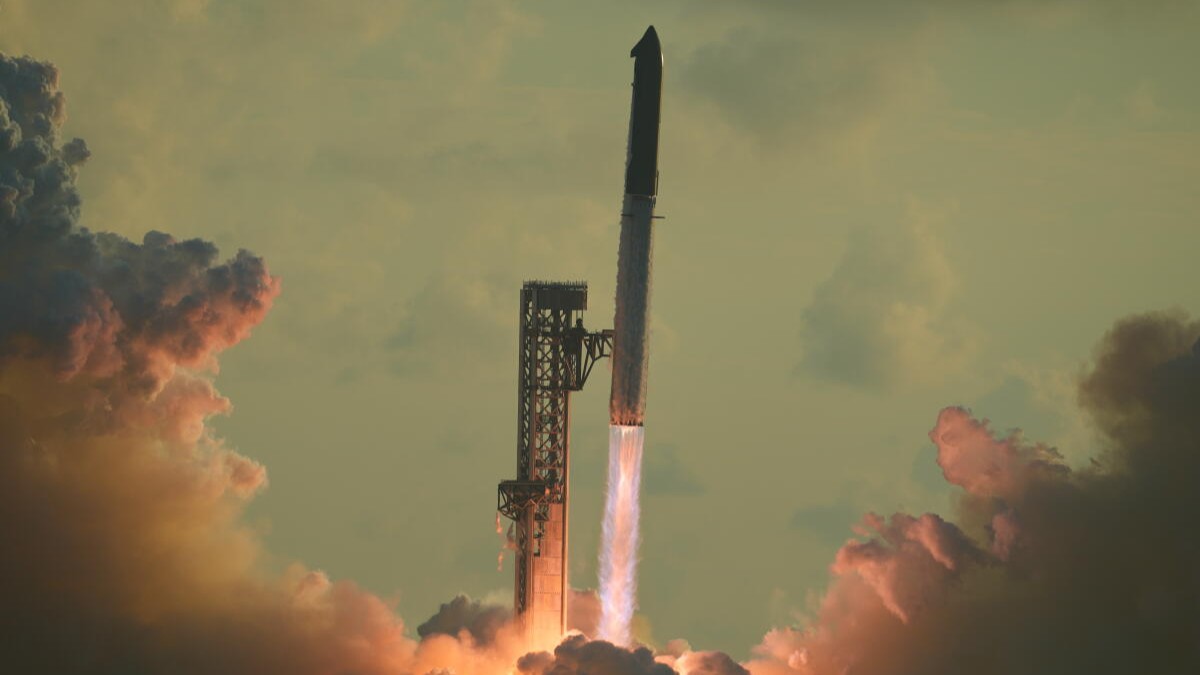
On Monday, September 28, 2026, SpaceX launched Starship Flight 14 from Starbase, Texas, right on the border with Tamaulipas. It is the largest rocket ever built: 124 meters tall, roughly the height of a 40-story building. For the first time in 14 flights, the ship reached orbit and delivered a real payload: 26 third-generation Starlink satellites. There were failures, and they were not minor: one of the ship's engines shut down early, and the mission, planned to last about 10 hours, was cut to just over three. Even so, the main objective was achieved. Here we explain what happened, without jargon, and why a business owner in Mexico should pay attention: this could change connectivity in areas that fiber still does not reach.
What happened on Flight 14, explained simply
Liftoff was at 6:48 a.m. Central Mexico time. The rocket has two parts: the Super Heavy booster, which provides thrust during the first few minutes, and the Starship spacecraft, which continues into space. The booster lost one engine on the way up and another during its return maneuver, but it made a controlled splashdown in the Gulf of Mexico about seven minutes after launch. The ship also lost one of its six engines. The flight control team reviewed the telemetry, concluded that engine was no longer essential, and decided to proceed. Starship reached an altitude of about 290 kilometers and a speed of roughly 28,000 km/h, released all 26 satellites and, out of caution, SpaceX brought it back early. It splashed down in the Pacific north of Hawaii three hours and eight minutes after liftoff, then tipped over in flames.
- 14 flights in three years: the previous 13 were suborbital; this is the first to reach orbit and the first to generate revenue for SpaceX.
- 26 Starlink V3 satellites deployed, each with about 10 times the capacity of the previous generation. They are expected to start serving customers within a few weeks.
- Up to 60 satellites per launch on future missions, around 20 times the network capacity a single Falcon 9 launch adds today.
- 3 of the satellites carry cameras to photograph the ship's heat shield, a necessary step toward making it reusable.
- From a planned 10 hours and six trips around Earth to 3 hours and roughly two: that was the cost of the engine failure.
- 1 engine lost on the ship and 2 on the booster: engine reliability remains the program's biggest open issue.
Why it matters to a small business in Mexico
Starlink already operates in Mexico and is today the internet option for many ranches, greenhouses, mines, construction sites and highway branches where there is no fiber or reliable cell signal. The bottleneck of that network is not the technology but the capacity: how many users each area can support before speeds drop. Satellites with ten times more capacity, launched 60 at a time, point to faster speeds, less congestion and, over time, more competitive plans. For a business, that translates into concrete things: IoT sensors reporting crop moisture or cold-room temperature in real time, remotely monitored security cameras, point-of-sale systems that stay online and cloud systems accessible from anywhere. A word of caution: SpaceX has not announced any pricing or dates for Mexico tied to this flight.
Before signing up for satellite internet for a remote operation, measure how much data you actually need. A typical IoT sensor sends a few kilobytes per reading; an HD camera streaming all day can use hundreds of gigabytes a month. That difference determines whether satellite, a low-power network such as LTE-M or LoRaWAN, or a combination with automatic failover is the right fit.
The lesson from Starship is not that everything went perfectly; it is that the team had the data to decide within minutes whether to continue or come back. That is what every business should have with its own systems.
There is a second, less obvious lesson. SpaceX did not wait for a perfect rocket: it launched, failed, fixed and launched again 14 times in three years. When an engine shut down, the decision to continue was not a hunch; it was a real-time reading of data. A small business can apply the same principle without going to space: launch a first version of its system, measure what happens and improve in stages, instead of betting everything on one massive year-long project. Next for Starship is an attempt to catch the ship with the launch tower and a test of in-orbit propellant transfer, key for NASA's missions to the Moon. At Kyloo, we design IoT, connectivity and custom software solutions for field operations. If you have a branch or a property without a good connection, let's talk.
- #Starship
- #SpaceX
- #Starlink
- #internet satelital
- #IoT
- #pymes

Written by Andrés García
Kyloo team — we ship IoT in 4–10 weeks. Fixed price after a 48h discovery.
View IoT