NVIDIA's New Robots: What Changes in 2026
Discover NVIDIA's new humanoid robots, how they use AI, and what opportunities they create for businesses considering automation.
NVIDIA Is No Longer Just Powering Computers: It Is Powering Robots
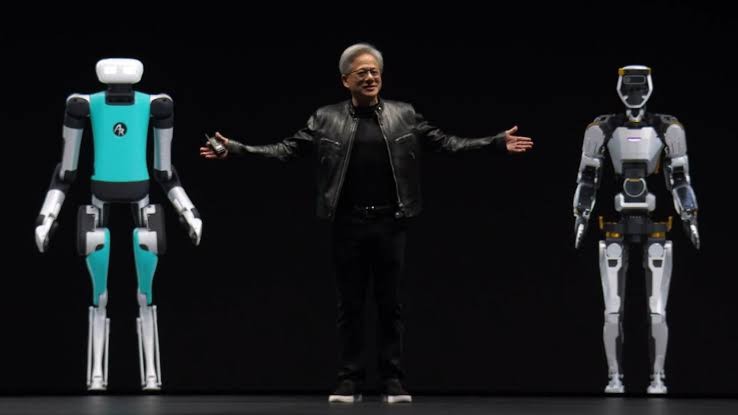
NVIDIA is taking artificial intelligence beyond screens and into machines capable of interacting with the physical world. On October 21, 2026, at GTC Berlin, the company announced advances to its Isaac platform and highlighted Agile ONE SN, a new humanoid robot developed by Agile Robots using NVIDIA technology. This is not a household robot ready for purchase. It is a platform for researching, training, and testing new capabilities. The goal is to enable machines to interpret instructions, recognize objects, and execute coordinated movements. For Mexican businesses, this development matters because it creates possibilities for more flexible automation in warehouses, factories, and distribution centers. However, a considerable gap still exists between an impressive technology demonstration and a profitable business implementation.
Agile ONE SN: The New Humanoid Powered by NVIDIA
Agile ONE SN stands 1.40 meters tall, weighs 40 kilograms, and features 31 degrees of freedom across its body. Each arm can carry a payload of up to 3 kilograms. Its five-fingered hands provide 20 degrees of freedom each, tactile sensors, and force control operating at 1,000 Hz. The robot integrates cameras, lidar sensors, and an NVIDIA Jetson Thor computer with 128 GB of unified memory and up to 2,070 FP4 teraflops of computing performance. These specifications support research into tasks requiring perception and precise movement. NVIDIA says the platform can reduce certain research setup activities from weeks to days, but that does not mean any company can immediately deploy it. Availability is planned for early 2027. Source: NVIDIA Newsroom, October 21, 2026, https://nvidianews.nvidia.com/news/nvidia-advances-isaac-platform-for-general-purpose-robotics-with-new-reference-humanoid-frameworks-simulation-pipelines-and-data/
Isaac GR00T: The Intelligence Behind the Movements
At the center of this strategy is NVIDIA Isaac GR00T, an open platform for developing robotic intelligence. Its models combine visual information, natural-language instructions, and data about the robot's own position to generate actions. In July 2026, NVIDIA documented GR00T 1.7, a 3-billion-parameter model pretrained on approximately 32,000 hours of real-world data and 8,000 hours of simulated data. The platform also includes Isaac Lab for training behaviors and Isaac Sim for testing them virtually. This allows developers to experiment with movements before executing them on physical machines, although real-world validation remains essential. NVIDIA also introduced Isaac OS and Isaac Lab 3.0 in October. Source: NVIDIA Developer, https://developer.nvidia.com/blog/develop-humanoid-robot-policies-end-to-end-with-nvidia-isaac-gr00t/
- Manufacturing: research robots capable of handling components, supplying workstations, and adapting to different tasks.
- Logistics: develop systems that identify merchandise, sort products, and support order fulfillment processes.
- Inspection: combine cameras, sensors, and artificial intelligence to detect anomalies and record results.
- Simulation: test movements, routes, and industrial processes before investing in physical equipment.
- Research: use open models and reference platforms to develop specialized robotic solutions.
What Does This Mean for Mexican Small Businesses?
For a small or midsize business in Mexico, purchasing a humanoid should not be the first decision. The better approach is to identify repetitive processes and calculate their current costs. Consider a warehouse that spends 120 hours each month checking and recording inventory. At an illustrative labor cost of 100 Mexican pesos per hour, that activity costs 12,000 pesos monthly. If a digital data capture and automation system reduces manual work by 50%, potential savings would reach 6,000 pesos per month before software licenses, maintenance, and implementation expenses. This example does not represent verified performance from NVIDIA robots; it illustrates how to evaluate technology opportunities using numbers. Many companies can achieve improvements sooner through custom software, barcode scanners, sensors, and process automation without requiring a humanoid robot.
Before investing in robotics, measure three indicators: hours spent on the process, monthly operating costs, and error rates. Calculate returns while accounting for equipment, integration, training, maintenance, and supervision. An impressive demonstration does not automatically translate into a profitable business case.
The Next Step: Automate With Clear Business Goals
AI-powered robotics is advancing, but it still faces challenges involving safety, autonomy, reliability, and cost. NVIDIA and its partners are building tools to accelerate development; that does not guarantee humanoid robots will be economically practical for every company in 2026. The immediate opportunity for Mexican businesses is to prepare their operations by digitizing information, connecting systems, measuring processes, and automating specific activities. At Kyloo, we develop technology solutions focused on those goals, from custom software to integrations and artificial intelligence. The recommendation is straightforward: start with the problem you need to solve, not the most exciting technology available. Robots may become part of your company's future, but a well-digitized operation provides a much more useful foundation for getting there.
- #NVIDIA
- #robots humanoides
- #inteligencia artificial
- #automatización industrial
- #Isaac GR00T
- #innovación empresarial
Written by José Saldaña
Kyloo team — we ship Applied AI in 4–10 weeks. Fixed price after a 48h discovery.
View Applied AI